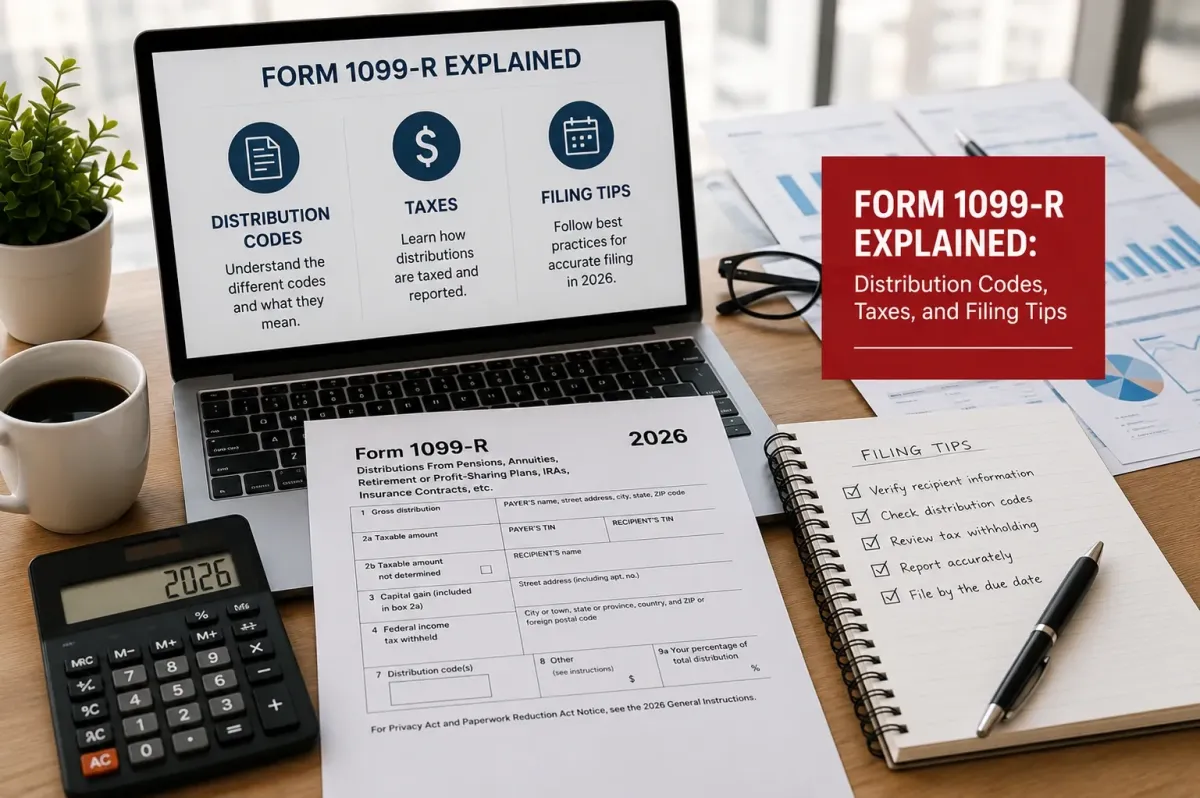
Form 1099-R Explained: Codes, Taxes & Filing Tips
Key Takeaways
Box 7 on Form 1099-R contains a one- or two-character code that determines the income tax and penalty (if any) applicable to a distribution.
Code 7 refers to a normal distribution, which would not incur any penalty (see Code 1 below for early distributions that do incur a penalty). A distribution code is a one- or two-character code that determines how a distribution is taxed. A number of different distribution types have their own distribution codes below.
Good tax preparing software is able to identify code mismatches and alert preparers prior to filing the tax return.
Introduction
Tax season brings a flood of retirement paperwork, and Form 1099-R is one of the most misread documents in the stack. In fact, many tax preparers have received a letter from the IRS 6 months after they filed a return due to an error in Box 7 of a 1099-R distribution code.
This blog will go through the 1099-R form line by line, explaining in simple terms what each line is and how to read it so that you can file your client’s return correctly without any costly errors.
What Is Form 1099-R and Who Sends It Out?
As a tax professional involved in tax professional marketing, you need to understand the distribution codes found in Box 7 of Form 1099-R. The payer reports these distribution codes in Box 7 of Form 1099-R Distributions From Pensions, Annuities, Retirement or Profit-Sharing Plans, IRAs, Insurance Contracts, etc.) that is sent to the recipient. A solid understanding of these codes not only helps ensure accurate tax preparation but also supports effective client communication and tax professional marketing efforts. See the Box 7 Distribution Code and Description section below to better understand how each code is reported and its tax implications.
It is the preparer’s main concern to report the correct code and match the code reported by the payer to what actually occurred in the recipient’s account.
What Do the Box 7 Distribution Codes Actually Mean?
First, let’s take a look at the important box of codes on the 1099-R distribution statement. In Box 1 of the 1099-R, the first character of the code is very important as it describes the general nature of the distribution. An early distribution prior to age 59 1/2 is reported with a code of 1. If no exception applies to this code, then a 10% penalty would typically apply.
In the rest of this article, we will look at all of the distribution codes in more detail, but for now it is enough to match the code to the distribution description and obtain a corrected 1099-R from the payer if the code appears to be wrong.
Is Every 1099-R Distribution Taxable?
A 1099-R Distribution is NOT Taxable in Direct Rollovers reported using Code G (e.g. moved from one qualified plan/IRA to another). Most qualified Roth distributions are tax-free. The rest of the distributions reported on the 1099-R (e.g. Code 1 and Code 7)report the gross distribution using Box 2a of the 1099-R.
Such amounts are reported as ordinary income on the recipient’s tax return, assuming no exceptions apply. Blank Box 2a indicates that the payer provided a copy of the Form 1099-R to the recipient. Check the payer’s return and the plan administrator’s documents for the recipient if Box 2a is blank.
What Filing Mistakes Trip Even Experienced Preparers?
The biggest error made by experienced tax return preparers when preparing returns of individuals who receive distributions from qualified retirement plans is the failure to complete and attach to the taxpayer’s return a Form 5329 for distributions reported with a penalty code of 1, even though the distribution is eligible for a penalty exception.
Other errors made by experienced tax return preparers include the failure to include the tax return of a trust or estate when distributions are made to beneficiaries by a trust rather than directly to the individual beneficiaries. Tax return form 1041 tax software that flags fiduciary income not reported on a Form 1040 return can be very helpful in ensuring correct reporting of distributions received by a trust.
The Bottom Line
First of all, Form 1099-R looks easy enough until the codes stop matching the client's situation. Slow down in Box 7 and verify any unusual payments with the payer. Then allow Form 1041 tax software to handle the more complex fiduciary issues. Getting this one simple form correct will keep the IRS at bay and keep your clients coming back to you year after year.
FAQs
What happens if my 1099-R has the wrong distribution code?
Payers are able to correct distributions that have been reported on a return by distributing a corrected 1099-R to the return preparer for filing on the return of the taxpayer. NEVER attempt to alter a distribution reported by a payer on a 1099!
Can a Code 1 distribution avoid the penalty?
Is there a way to report a distribution subject to penalty and have the penalty waived? Yes. For example, if an early distribution is made to pay medical bills or to assist a first-time home buyer of a primary residence, a penalty may be waived. In order to report these distributions and request a waiver of the penalty,
Does a direct rollover need to be reported on a taxpayer’s return?
Yes. Generally, distributions that are made by direct rollover to another qualified retirement plan or to a traditional or Roth IRA are not reported as taxable income. (Such distributions may be reported by the receiving entity on a Form 5498 Disclosure Statement, however.
Where can I get a current list of distribution codes (Box 7)?
The IRS Instructions for Forms 1099-R and 5498 contain a complete list of distribution codes currently in effect as well as annually updated by the IRS. You should refer to these instructions for each tax season to determine the correct distribution codes.
The Bottom Line
The Retirement Distribution Forms 1099-R appear to be very simple, but there are many Distribution Codes in Box 7. So, it is critical that the Distribution Codes on a client’s Form 1099-R match what actually happened with their account distribution(s). After you confirm the correct Distribution Codes for all of a client’s distributions, you will complete their tax returns (e.g. Form 1040 and all related forms and schedules) with very good tax preparation software.
(Note: Their fiduciary distributions will probably require tax professional software for their Form 1041 tax returns. So long as a client’s retirement distributions are tax prepared each year correctly, they will be a repeat client for many years.

