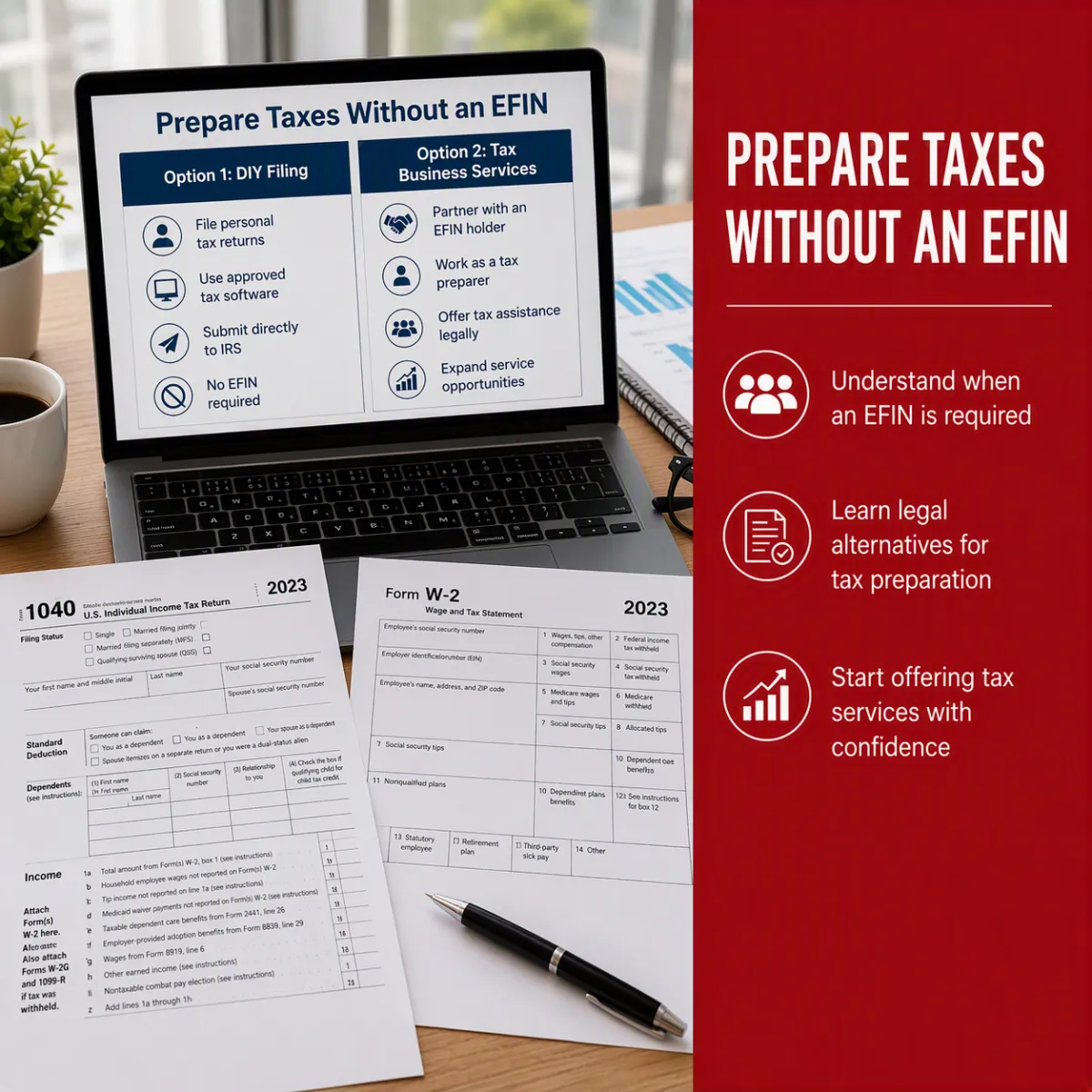
Can You Prepare Taxes Without an EFIN? 2026 Guide
Key Takeaways
An EFIN is tied to e-filing, not simply preparing a tax return.
Choose software based on your workflow, not price alone.
Start the EFIN process early if you plan to e-file for clients.
Introduction
Starting a tax preparation business can feel overwhelming. There are clients to find, tax laws to learn, software to choose, and compliance requirements to understand. One question that often comes up for new preparers is simple: Do I need an EFIN to prepare tax returns?
The short answer is: not necessarily to prepare a return, but an EFIN is important if you plan to electronically file federal tax returns for clients through your own authorized e-file operation.
Understanding that difference before you buyEFIN software or accept clients can save you from an expensive mistake.
What Is an EFIN?
An Electronic Filing Identification Number, or EFIN, identifies a firm that has been approved by the IRS to participate in its e-file program. The IRS says providers receive an EFIN after completing the e-file application and passing its suitability check.
The application involves providing information about the firm, principals, and responsible officials. Depending on the applicant's professional status, fingerprinting may also be required. The IRS says approval can take up to 45 days.
So, if you're building a new practice, don't wait until the middle of filing season to start the process.
Can You Start a Tax Preparation Business Without an EFIN?
Yes, but there is an important distinction.
A tax preparation business no efin can potentially prepare returns without immediatelyoperating as its own IRS-authorized e-file provider. However, that doesn't mean you can simply transmit your clients' federal returns electronically by yourself.
The IRS states that tax professionals must become authorized e-file providers to electronically file their clients' federal tax returns. For return preparers who want to offer e-filing, the relevant provider role is Electronic Return Originator, or ERO.
That means a new preparer should think about their business model early. Will you prepare returns only? Will another authorized provider handle transmission? Or do you want your own firm to become an authorized e-file provider?
Those decisions affect the software and workflow you choose.
What Happens If You Use Tax Software Without an EFIN?
Searching fortax software without efincan be tempting when you're just starting out. You may want to keep costs low until you have a steady client base.
But don't assume every professional tax program works the same way.
Some software may allow you to prepare returns before you're ready to transmit them, while electronic filing may require an approved provider setup. The IRS also maintains lists of approved e-file providers and business providers, so it's worth verifying whether the software and filing arrangement you choose supports your intended workflow.
The key question isn't simply, “Does this software work without an EFIN?”
Instead, ask: What can I prepare, what can I transmit, and whose EFIN is used when a return is electronically filed?
Getting that answer before signing up can prevent headaches later.
How Should New Tax Preparers Choose Software?
Most Tax Preparation Software is Advertised Based on its Stated Price, Not Its True Value.
Examine your workflow and the types of returns that you will be preparing for your clients. Will the software enable the use of professional forms and perform accurate calculations? Will it facilitate the management of clients? Will it support e-filing, contain regular updates, and be backed by a first-class support team of technical experts who can assist at the times when you need them most?
When comparing tax preparation software, consider the following five important factors to choose the right tax preparation software for tax professionals:
1. Return support: Will it process all of the types of returns that you need to prepare for your clients (e.g. individual, business, estate/trust, state returns)?
2. E-filing: Are e-filing services included in the package, will a Tax Professional’s EFIN be required or are there additional services provided by a third party tax filing provider.
3. Security: Look for tax preparation software that uses encrypted data to secure client information online. Look for a client portal and various access levels to control who can do what. Also make sure they have adequate backups in place.
4. Customer support: This is key when you have a question or need help during tax season. Make sure the software provider offers sufficient support in a timely manner.
5. Pricing: Highlight the total cost for the software including subscription fees, charges per return, state fees, e-file fees, and any optional add-on services for professional tax preparation software.
While extremely cheap software may seem like a good deal for the first year, cheap is not always better in the long run. Pay now for features your clients need or pay later.
When shopping for the lowest-cost professional tax software for your first year of practice, be sure to include the cost of per return add-on’s, e-file fees, state return fees, and additional software features (add-ons) that will increase in cost as your client list grows.
What Should You Do Before Applying for an EFIN?
If you're serious about building a professional tax practice, start with the IRS application process.
The IRS currently lists three major steps: create or access an IRS e-Services account, complete and submit the e-file application, and pass the required suitability check. Once approved, the IRS sends the firm's EFIN.
While you're waiting, you can focus on building your workflow, learning your software, organizing client documents, and establishing secure recordkeeping procedures.
Remember that an EFIN belongs to the firm rather than an individual preparer. The IRS notes that one EFIN can cover the tax return preparers working within that firm.
Don't Forget Your Responsibilities as a Paid Preparer
An EFIN isn't a substitute for tax knowledge or professional judgment.
Paid preparers have due-diligence responsibilities for certain returns and credits. The IRS requires preparers to ask reasonable questions, evaluate client information, maintainappropriate records, and complete Form 8867 when applicable.
This is another reason to choose professional software carefully. Good software can support your workflow, but it doesn't replace your responsibility to review the information provided by clients.
Conclusion
Starting a tax practice without an EFIN is possible, but you must understand the limits before e-filing client returns. Choose software based on compliance, features, scalability, and total cost. TaxDragon Pros offers tailored estate and trust tax software to support professional tax preparers.
FAQs
1. Can I prepare tax returns before getting an EFIN?
Yes, preparing a return and electronically filing it are different activities. If you plan to e-file federal returns for clients through your own operation, you'llgenerally need to become an authorized IRS e-file provider.
2. Can I use tax software without an EFIN?
Some professional software may support return preparation without immediate e-file transmission, but capabilities vary. Before purchasing tax software without efin, confirm exactly what the software allows and how electronic filing is handled.
3. What is the best tax software for a new professional?
The best tax software for tax professionals depends on your client volume, return types, budget, state requirements, e-file needs, and preferred workflow. Compare the complete cost and features before choosing.
4. Is inexpensive professional tax software a good choice?
It can be provided it includes the features your practice actually needs. When comparing inexpensive professional tax software, check all per-return, state, e-file, and add-on fees rather than judging the product by its starting price.

